Agnese Raimondi → Get in touch

Agnese Raimondi is a multidisciplinary designer, artist and researcher based in Berlin, working and co-creating with living systems and biomaterials.

Contents

01About me

I am a designer, researcher, artist and alchemist. I’m fascinated by transformation and co-creation with nature, and these are the focus of my practice. When I first started exploring biomaterials, I realised that for the first time a material could capture time and explore it with me: growth, transformation, decomposition. A full cycle that I could finally see clearly and it opened up a whole world inside me.

I come from a background in Fashion and Costume Design. My passion for textiles, and for the relationships between people, materials and society, led me towards regenerative design. With a Master in Design for Emergent Futures, I confirmed my passion for research, more-than-human design, and participatory and speculative approaches.

02Methodology

I work mainly with biomaterials and biofabrication: biomaterials are materials that come from living matter, such as plants, algae, fungi or bacteria, rather than from petrochemicals; while biofabrication is a way of making in which a living process does part of the work. For example, growing roots of plants to make a textile (you can read about it in the Work section).

Photography is what accompanies me most, especially when I document my materials and I am always experimenting with something new, starting from study and research, but I also let the results surprise me. These materials don’t always behave as planned: a bioplastic can dry differently than expected, a dye can react differently on each fibre, and external factors I can’t control, like the weather, can change the result. When something unexpected happens, I don’t see it as a failure. I try to understand why it happened and to accept what the material became and what it taught me. This way of working is also the starting point of my workshops and collaborations, which tend to open onto wider conversations about how we relate to matter.

03Work

Education

Master in Design for Emergent FuturesBarcelona, 2025 – 2026

A hands-on, multidisciplinary master where I worked daily in the biolab, learned digital fabrication and researched Pleasure Activism.

+ Read more– Close

I did my Master in Design for Emergent Futures in Barcelona, organised by IAAC and ELISAVA Barcelona School of Design and Engineering, in collaboration with Fab Lab Barcelona and the Fab Academy. It is a hands-on, multidisciplinary programme that takes design beyond aesthetics, to face complex challenges where many different factors are connected. The programme is built around four pillars: Explore, Build, Reflect and Apply. Through the Fab Academy, based on MIT’s course “How to Make (Almost) Anything” and led by Neil Gershenfeld, we learned digital fabrication, coding and synthetic biology, and we looked critically at technologies such as AI, blockchain and biotechnology.

What I loved most is that I had the chance to work every day in the biolab, a laboratory where you research and experiment with living materials, and to deepen my research on biomaterials. I also explored new technologies: I learned some coding and how to work with Arduino, a small programmable board that lets objects react to the world around them, and I discovered new software such as Rhinoceros, TouchDesigner, and learned how to 3D print. I integrated all of this into my projects.

My research project was about Pleasure Activism and what it means for women to live our own intimacy and pleasure, starting from my experience. I developed group facilitations to start conversations on the topic, and I prototyped games and objects of exploration to go with them. And working side by side with my classmates, I also learned rapid prototyping: turning ideas into real objects quickly, testing them and improving them together.
Selected projects

(UN)chastity

2026

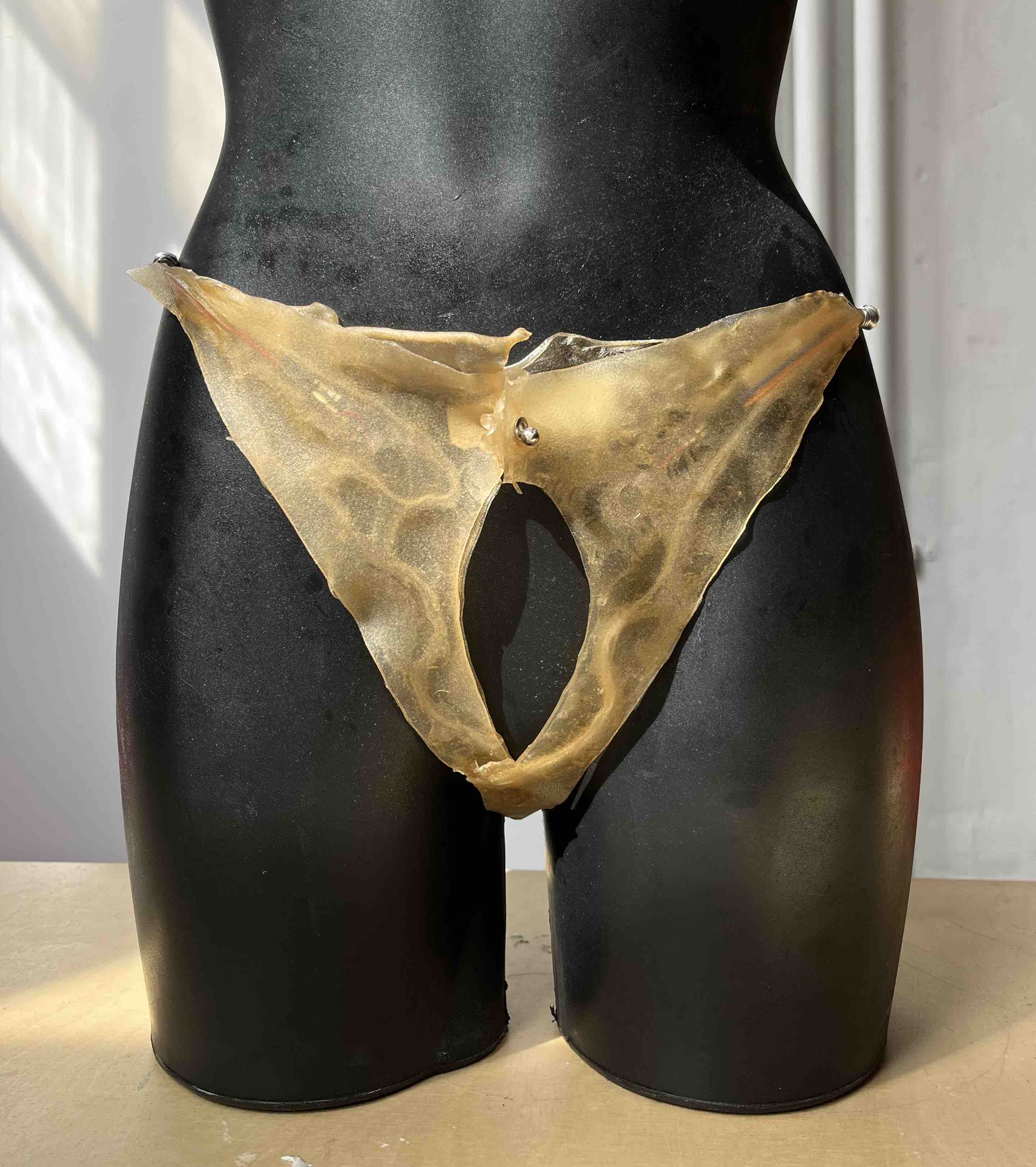
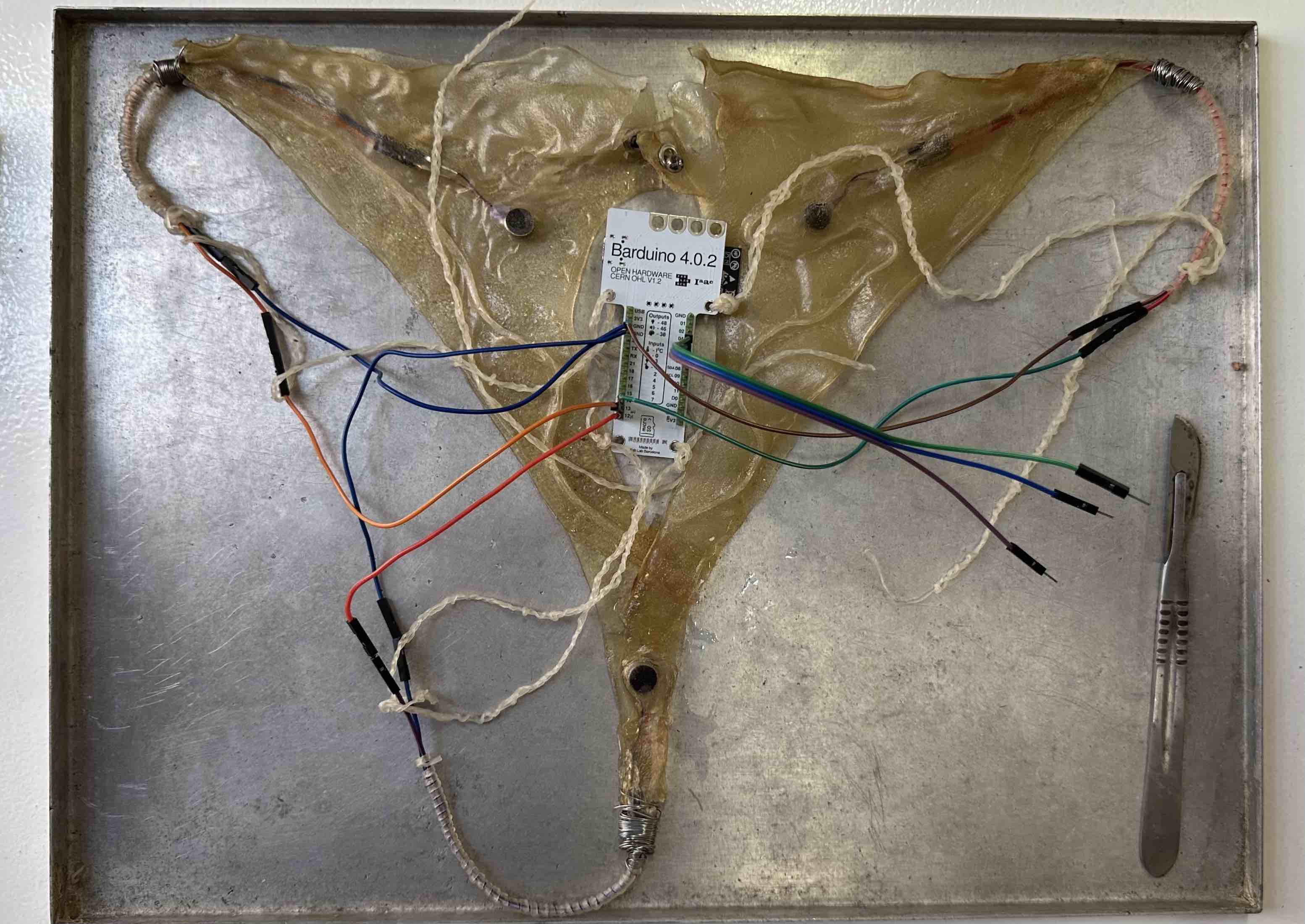
(UN)chastity is a project made in collaboration with Ivan Hunga Garcia. Is a pair of pressure-sensitive g-string underwear made from biomaterials, embedded with vibration motors that respond to touch pressure. We explored and experimented at the intersection of e-textiles, biodesign, and intimate wearable technology, trying to make our artefacts as much open source and DIY as we could.

If you want to know more, the project is fully open source and you can find it on Hackster.

(UN)chastity, photo 1
(UN)chastity, photo 2

Monsters and Pleasures

2026

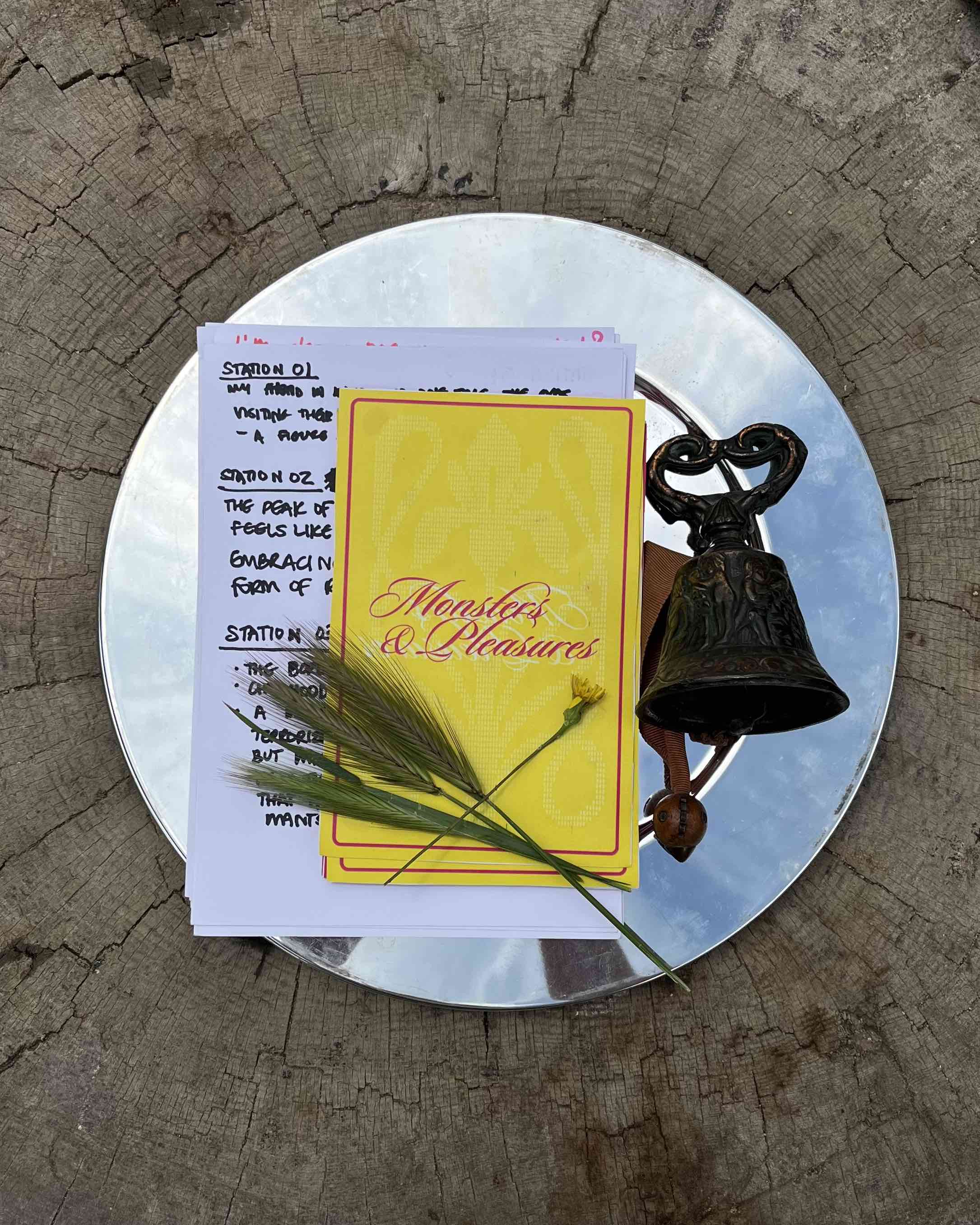
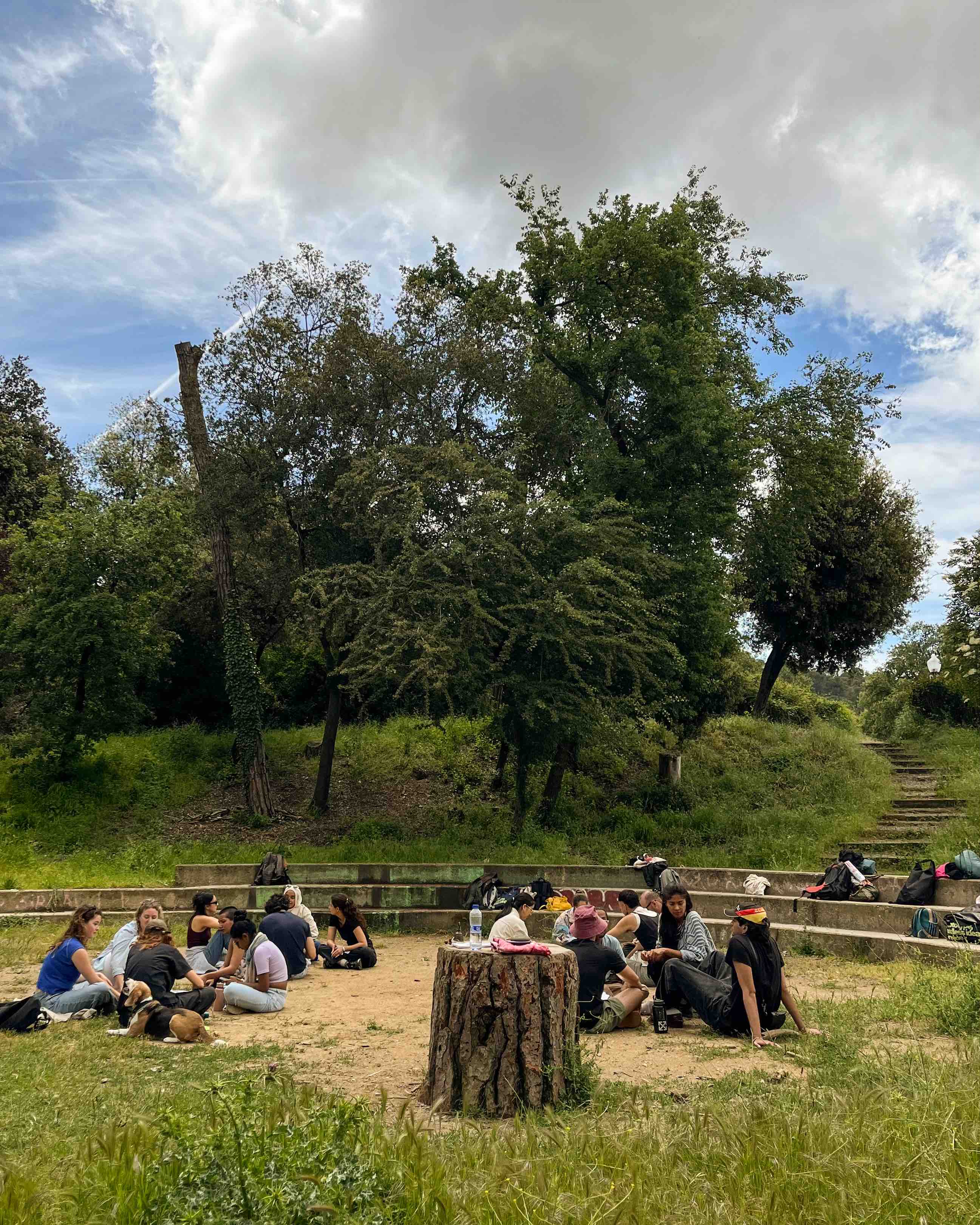
Monsters and Pleasures is a facilitation group I co-led with Alejandra Rivera, as part of my research on Pleasure Activism. About 20 people gathered outdoors to talk about intimacy, the body and vulnerable things. After an opening circle, groups of five rotated through four stations, where a host guided the conversation with a themed card and left a trace of it on paper, building a collective map. We closed with a circle to harvest what had emerged.

To explain to the participants what would happen, we made a small website. You can read the guide.

Monsters and Pleasures, photo 1
Monsters and Pleasures, photo 2

Biomaterial Lamp

2026

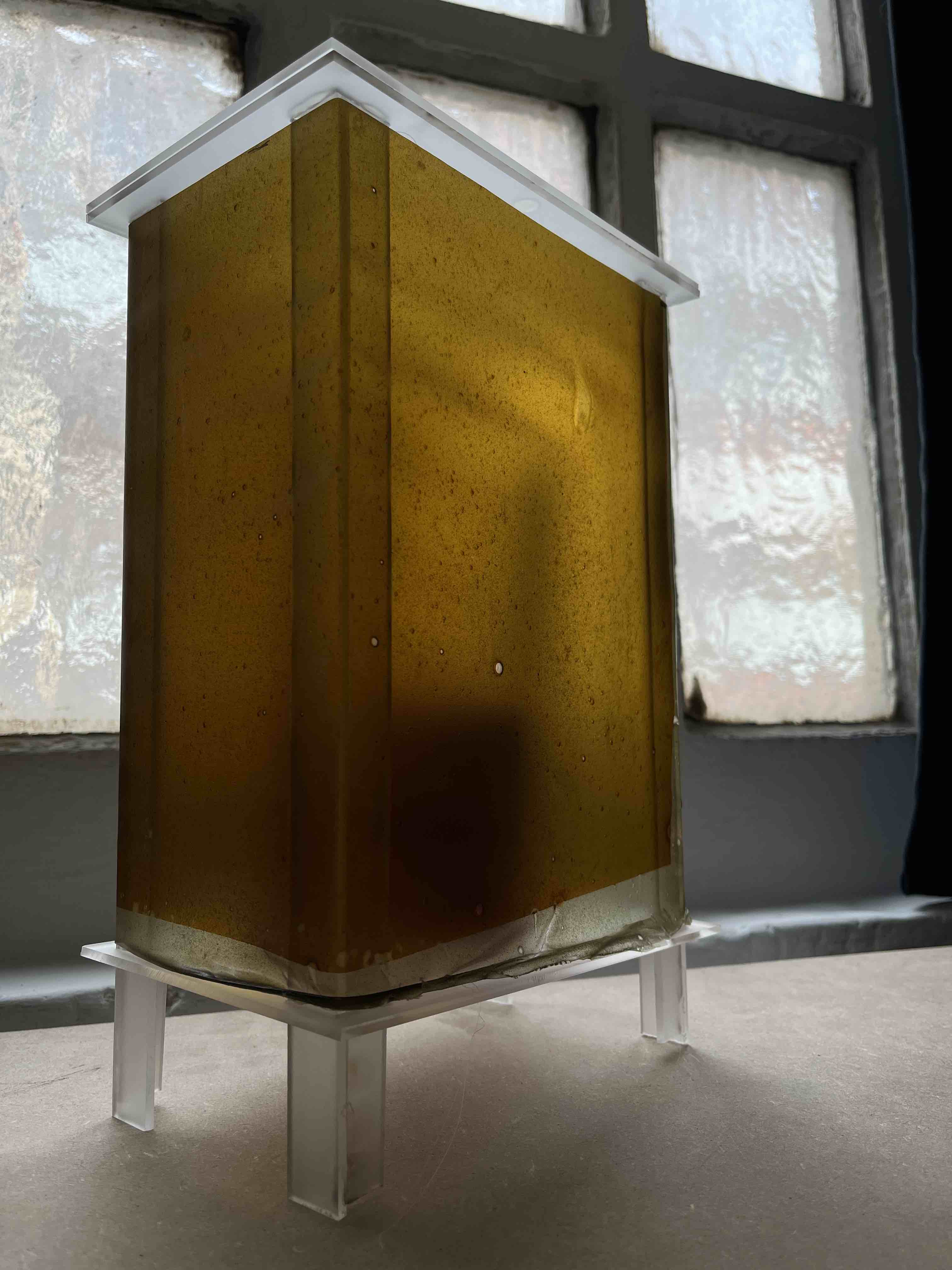
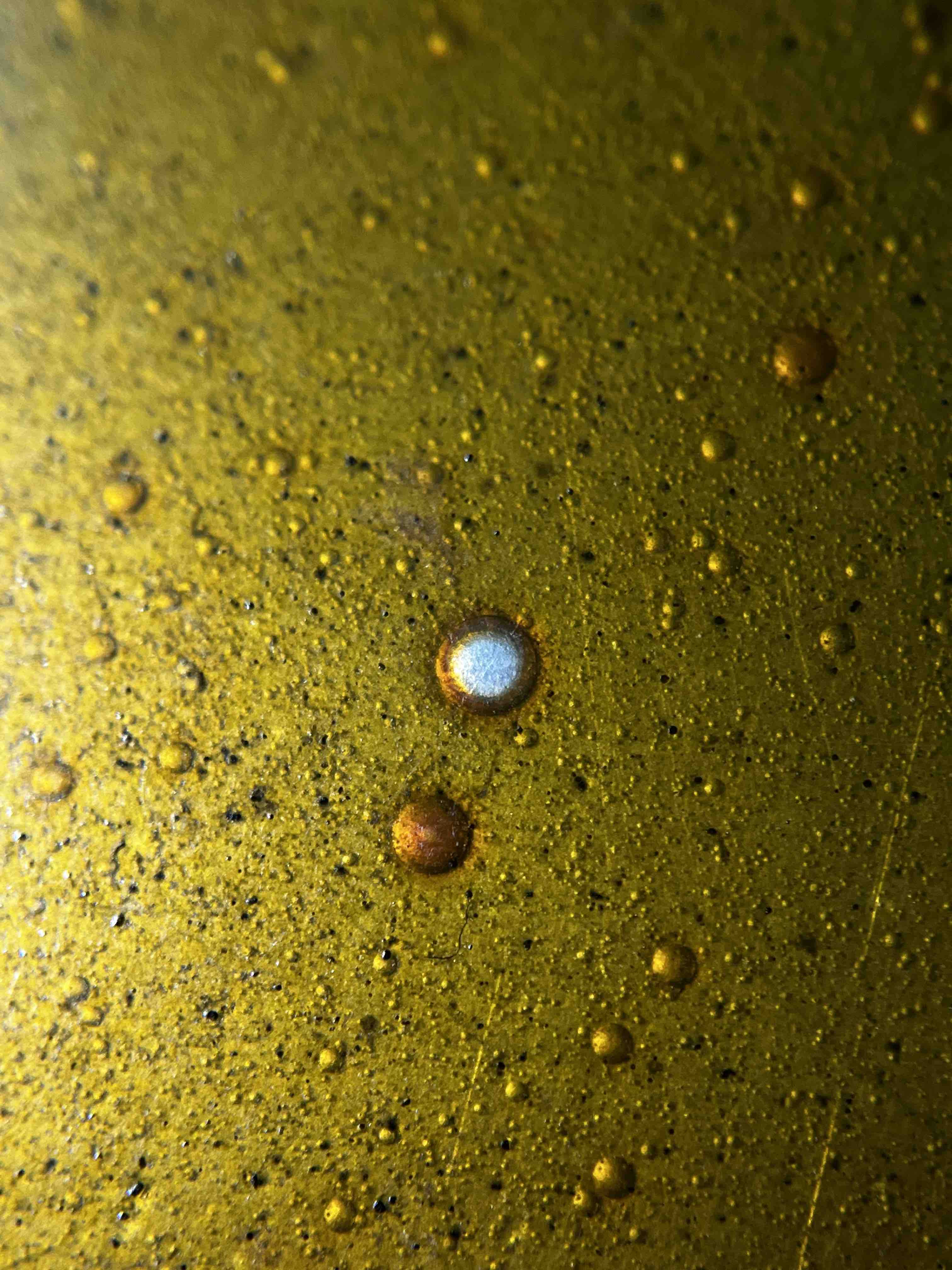
The Biomaterial Lamp is a project I developed together with Hannah Peevey. The structure is made of laser-cut acrylic, assembled by hand, and the biomaterial is made of agar-agar and spirulina, a blue-green algae.

It was also a lesson in rapid prototyping. Instead of aiming for a perfect object from the start, we built quickly, tested what worked and what didn't, and improved the design again and again. A laser cutter is precise and predictable, while a biomaterial is not, so prototyping fast was the way to learn how the two behave together. It taught me a lot about moving from an idea to a real object, and about turning mistakes into useful information.

Biomaterial Lamp, photo 1
Biomaterial Lamp, photo 2

Solar Oven

Workshop with Low-tech Magazine

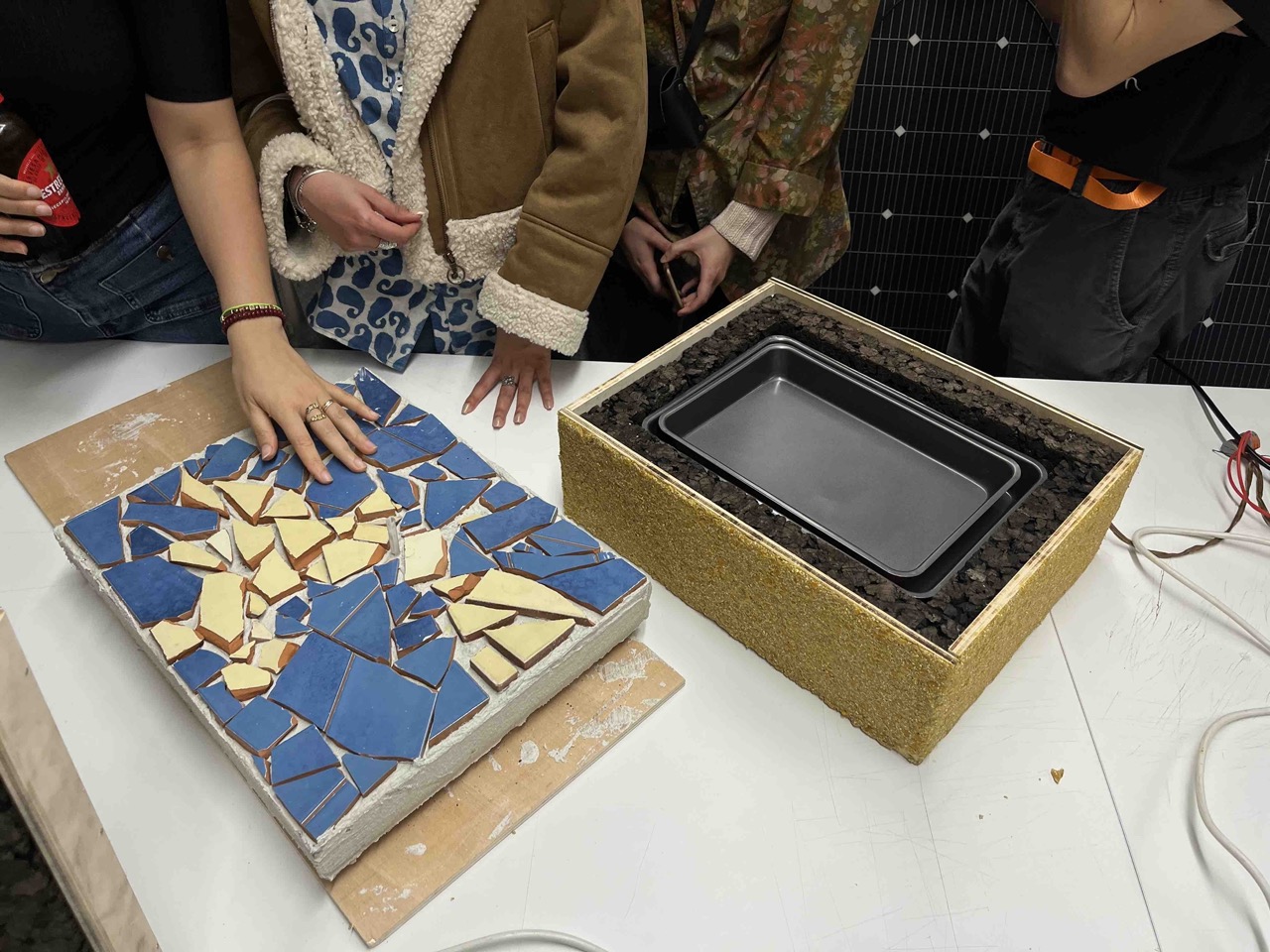
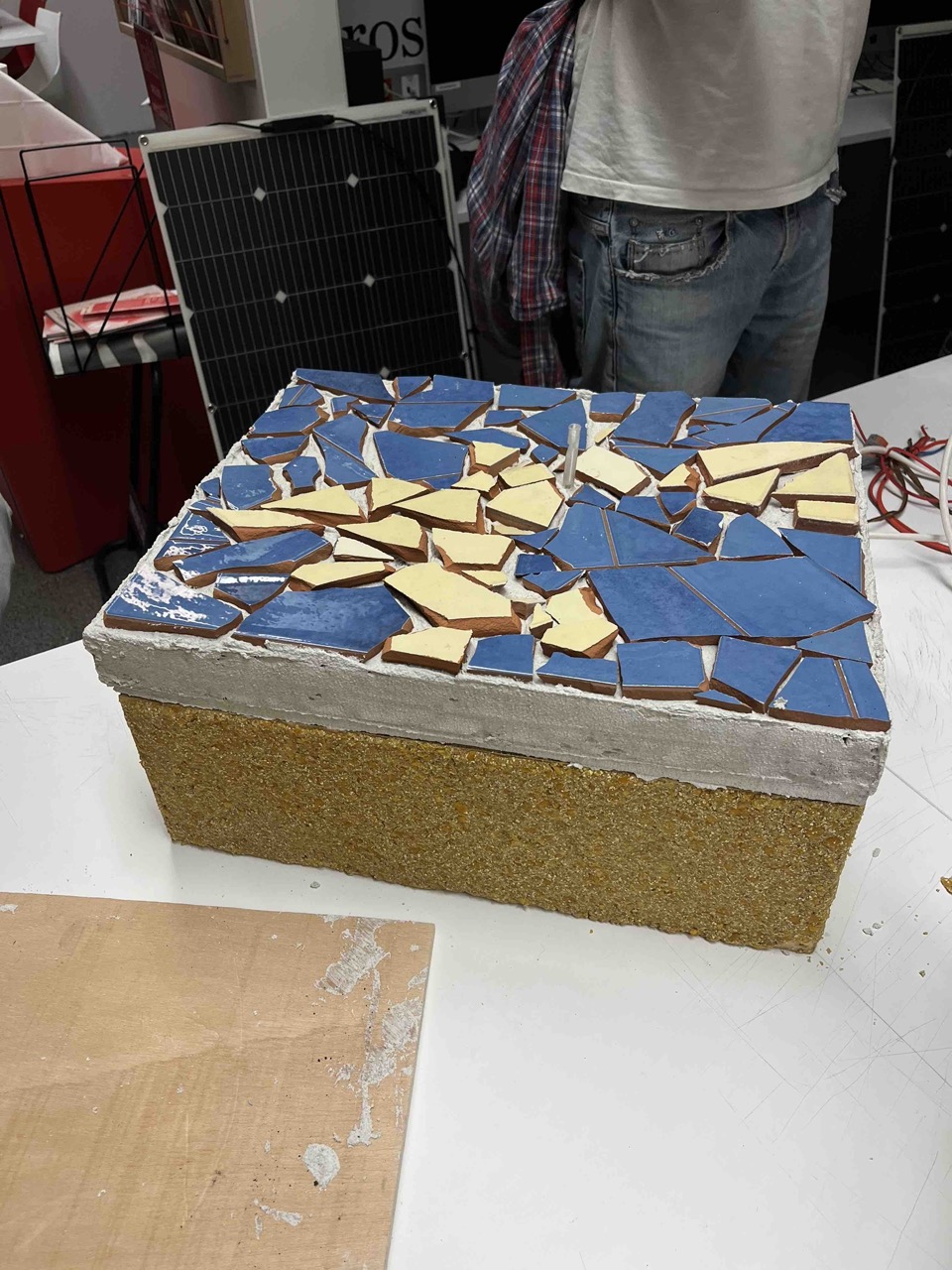
A workshop led by Kris De Decker of Low-tech Magazine, where we built a solar oven as a group in only two days, and then covered it with a biomaterial. It was a beautiful and fascinating experience, and I learned a lot.

If you want to know more, you can read how to build a solar-powered electric oven on Low-tech Magazine.

Solar Oven, photo 1
Solar Oven, photo 2

BA in Fashion and Costume DesignAccademia di Costume e Moda, 2020 – 2024

Fashion, textile and costume design projects from my BA are available on request. Write to me and I will send them over.

04Workshops